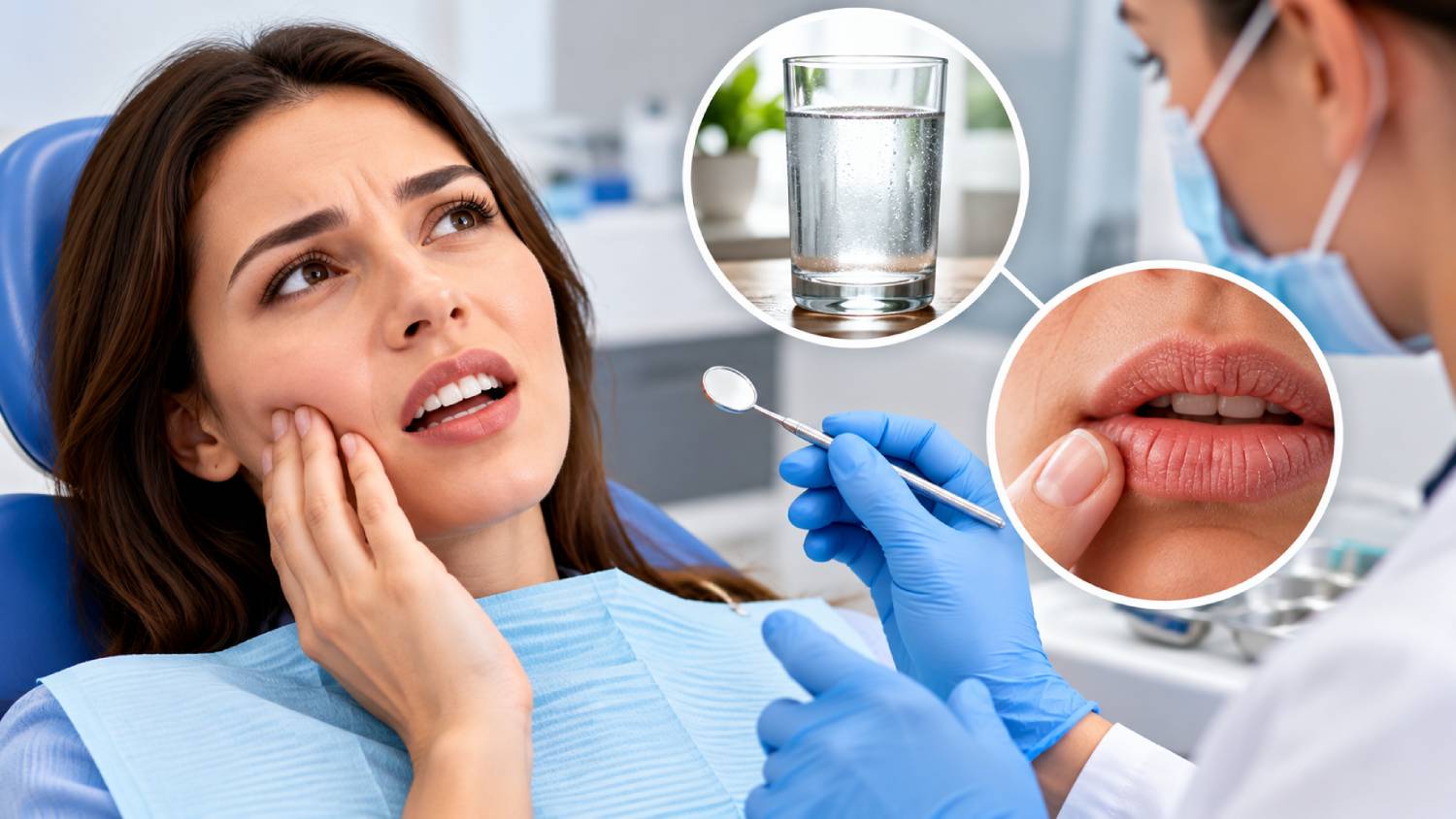
Your mouth feels off, and it is hard to ignore. Maybe your tongue sticks to the roof of your mouth, your lips keep drying out, or eating and talking feel rough in a way they did not before. You might be wondering if it is just a dry day, a medication issue, or something your dentist should take seriously, including whether a cosmetic dentist in Dedham MA can help. That uncertainty can wear on you, especially when the discomfort keeps showing up.
How Dentists Evaluate Oral Discomfort Linked To Dehydration starts with a simple idea. A dry, irritated mouth is not always just a mouth problem. Dentists look at your saliva, your tissues, your symptoms, and your health history to see whether dehydration, dry mouth, mouth breathing, medication side effects, or another issue is driving the pain. A general and cosmetic dentist is often one of the first professionals to notice these patterns because dehydration leaves visible clues inside the mouth.
Dehydration often shows up in the mouth before you expect it
Saliva does more than keep your mouth comfortable. It washes away food particles, helps control bacteria, protects enamel, and makes it easier to chew and swallow. When your body does not have enough fluid, saliva flow can drop. That can leave your mouth feeling sticky, sore, or strangely coated. The signs of dehydration can include dry mouth, less urination, dizziness, and fatigue, but many people notice the oral symptoms first because they are constant.
This is where discomfort builds fast. A dry mouth can lead to bad breath, a burning feeling, cracked lips, thick saliva, and tenderness along the cheeks or tongue. If it continues, the risk of cavities and gum irritation rises because the mouth has less natural protection. You may think you need a new toothpaste or a stronger mouthwash, when the real issue is that your mouth is not getting enough moisture from the inside out.
Dentists look for patterns that connect oral pain and low hydration
When dentists assess oral discomfort from dehydration, they usually start with your symptoms and how long they have been happening. They may ask whether the dryness is worse in the morning, whether you breathe through your mouth at night, whether you have started a new medication, or whether you have been sick, exercising more, or drinking more caffeine or alcohol than usual. Those details matter because dehydration is not the only reason saliva drops.
During the exam, dentists check the soft tissues closely. They look for a dry or sticky lining inside the cheeks, changes in the tongue surface, saliva that appears thick or stringy, redness, small cracks at the corners of the mouth, and areas of irritation that may come from friction rather than infection. They also check the teeth and gums, because a dry mouth often leaves a trail of new plaque buildup, gum tenderness, or cavities near the gumline.
Sometimes the cause is straightforward. You had a stomach bug, were not drinking enough water, and your mouth is reacting. Sometimes it is not. A person with ongoing dryness may actually be dealing with medication side effects, salivary gland problems, diabetes, autoimmune disease, or chronic mouth breathing. The National Institute of Dental and Craniofacial Research explains that dry mouth can have several causes, which is why a careful dental evaluation matters.
Dry mouth symptoms can point to a larger health issue
You may go in thinking the problem is minor, then hear your dentist ask about your overall health. That is not a detour. It is part of the evaluation. If your mouth has been dry for weeks, or if the soreness comes with trouble swallowing, altered taste, hoarseness, or frequent cavities, your dentist may recommend speaking with your physician as well. MedlinePlus notes that dry mouth symptoms and causes can overlap with other medical concerns.
This kind of exam can save time and frustration. Instead of treating only the surface discomfort, your dentist works to separate temporary dehydration from a more persistent saliva problem. That distinction affects what comes next, from hydration advice to fluoride protection to referrals for medical testing.
Home care and professional dental evaluation serve different roles
| APPROACH | WHAT IT CAN HELP WITH | LIMITS |
| Drinking more water | Improves mild dehydration, eases temporary dryness, supports saliva production | Will not fix dryness caused by medication, illness, or salivary gland dysfunction |
| Humidifier and nasal breathing support | Helps if dryness is worse overnight from mouth breathing | Does not address cavities, tissue damage, or the reason for chronic mouth breathing |
| Sugar free gum or saliva substitutes | Can stimulate saliva and improve comfort during the day | Relief may be short lived and symptoms can return quickly |
| Professional dental exam | Identifies tissue changes, decay risk, gum irritation, and patterns linked to dehydration or dry mouth | May need follow up with a physician if the cause extends beyond oral health |
The table reflects a common pattern in practice. Self care can ease the feeling of dryness, but it cannot tell you whether your enamel is being damaged or whether the discomfort is tied to a larger medical issue. That is why a dentist dry mouth evaluation has real value, especially when the problem keeps returning.
Three steps you can take right away
Track when the dryness happens. Notice whether it is worse after exercise, first thing in the morning, during long workdays, or after certain drinks or medications. A short list of patterns gives your dentist useful clues.
Protect your mouth while you sort it out. Sip water regularly, limit alcohol based mouthwashes, and avoid tobacco. If your mouth feels sore, choose bland foods for a few days and use a lip balm to reduce cracking.
Schedule a dental visit if symptoms persist. If the discomfort lasts more than a few days, keeps coming back, or comes with bad breath, burning, trouble swallowing, or sudden cavities, get it checked. A dentist can assess hydration related mouth discomfort and help you catch problems early.
Relief starts with a clear look at what your mouth is telling you
Ongoing dryness can make daily life feel harder than it should. Eating is less pleasant, sleep may be disrupted, and you may start second guessing every symptom. You do not have to keep guessing. A careful dental exam can show whether dehydration is the likely cause, whether your mouth needs added protection, or whether it is time to look deeper. If your oral discomfort is not letting up, schedule a visit with a general and cosmetic dentist and get a clear answer about what is going on.


