Billions of people worldwide depend on potatoes as a dietary staple, taking advantage of this popular crop’s incredible nutritional density and culinary versatility. The importance of this staple food source is only increasing, as shifting consumer demands and changing climate patterns have necessitated the availability of more efficient, more nutritious foods. As a result, a complex supply chain that employs millions of people has arisen. It is this network that so many communities depend on for their food source.
Transportation is a key link in this supply chain, as many potatoes cover truly staggering distances as they make their way from farms to tables. But how are potatoes transported around the world on such a large scale? This post will attempt to answer that question, while also offering some insight as to why this simple crop has become so important worldwide.
It All Starts with Farm Storage
Potatoes are one of the most widely consumed crops in the world, with billions of tons grown annually in dozens of countries. Their global presence is partially due to their adaptability to various climate conditions. While they are best suited to mild temperatures and well-drained soil, they can adapt to any number of environments, provided they are properly cared for. This popular staple crop can also be shipped over long distances with relative ease, due largely to its long shelf life when properly stored.
The process of storing potatoes for transport begins on the farm, soon after the harvest. Temperature control is key. Freshly harvested crops are left in a cool, dark, and high-humidity area for up to two weeks to cure before being transferred to mesh or burlap storage bags. The temperature should be kept at 50° Fahrenheit or lower to discourage sprouting and allow the skin to harden, making the potatoes hardier for their eventual journey across the country and the world.
The Sorting Process
Before they can be shipped out to be sold, potatoes undergo rigorous quality control to ensure they are suitable for sale and consumption. As many potatoes undertake long overseas journeys, the sorting process is also critical to preventing the spread of diseases, fungi, and parasites to vulnerable foreign farms and ecosystems.
On large-scale, modern farms, many advanced technologies are now being utilized to facilitate the quality-control process. For example, as potatoes are transferred from one area to the next via a conveyor belt, a camera can be used to detect any that are discolored or otherwise unhealthy in appearance. An automated system can then remove the defective ones from the conveyor belt, leaving only pristine potatoes to be sold to communities worldwide.
How Potatoes Are Packaged
The next step before transport can begin is to appropriately package the potatoes for the long trip ahead. Potatoes continue to “breathe” as they are stored. This means that proper airflow is a must if they are to be kept in one place for any length of time. Without proper ventilation, the moisture shed by each individual potato will be trapped and encourage the growth of harmful mold, which can spoil entire crops if left unchecked.
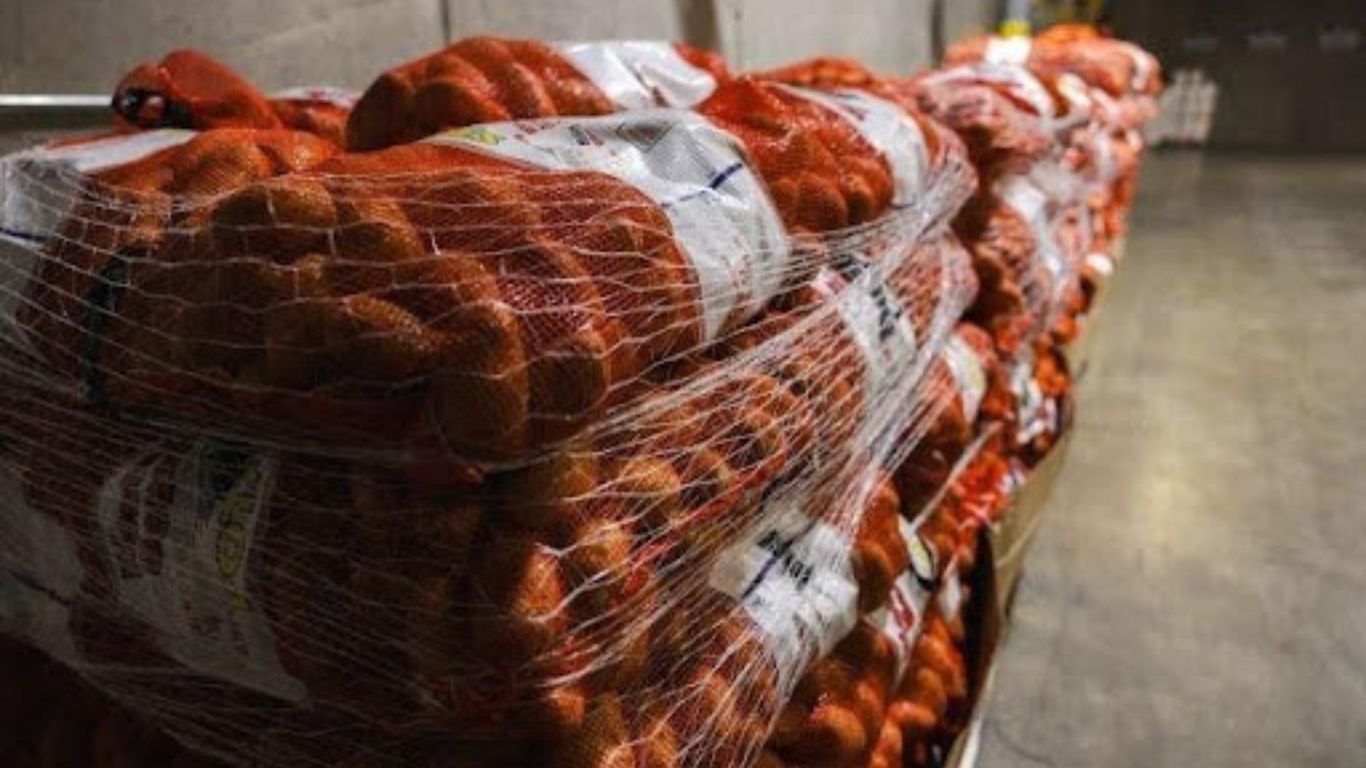
To prevent potatoes from decaying before they can be transported, they are stored in ventilated packaging, such as burlap sacks, which allow for moisture to be carried away before it threatens crops. It is also important that potatoes are stored in an environment with high relative humidity. Otherwise, crops may dry out and shrink, rendering them unappetizing and unsuitable as a food source.
Inland Transportation
Some of the potatoes grown on a farm will be sold locally, through either community grocery stores or at nearby farmers’ markets. Many, however, will have a great deal of distance to cover before they reach their ultimate destinations, and their journeys will begin with some amount of overland travel. Inland transportation is accomplished using several methods, most commonly, temperature-controlled trucks and trains.
As the temperature at which they are stored is a critical factor in the long-term survival of potato crops, specially built cargo spaces are constructed to ensure consistent refrigeration. These provide both insulation and airflow to maintain the ideal conditions for potato transport. Some potatoes are also intended to be sold frozen, and these can be transported at even lower temperatures. By keeping them at below freezing temperatures, their shelf life can be extended even further.
The Export Process
Potatoes may also be sent overseas for export. For example, many potatoes grown in the USA are sold to Asian countries such as Japan or Korea. These potatoes are transported in cargo ships, and the journey typically takes a few weeks. In that time, the crops must be kept continuously cool, necessitating the use of specialized cold storage along the way.
Each country has its own laws with regard to the import of produce; however, most are quite strict when it comes to preventing the spread of harmful invasive parasites and pathogens. As a result, local ports will typically perform their own quality control checks, once again assisted by the latest technology, to ensure that any crops entering their markets will be safe and healthy.
Local Distribution
The final step in the process is the sale of the potatoes. The potatoes may be processed before being sold, being turned into packaged or canned goods, while others may reach the consumer as-is. They may also reach restaurants or factories in bulk, where skilled food service professionals will transform them into any number of delicious dishes.
So, how are potatoes transported worldwide? Through a network of thousands of complex and interconnected systems worldwide. Many of the potatoes the world depends on are grown on small, family-owned farms in the states of Washington and Idaho. It’s the farmers working there that take the critical first step in providing a fresh source of nutritious and delicious food to families across the world.