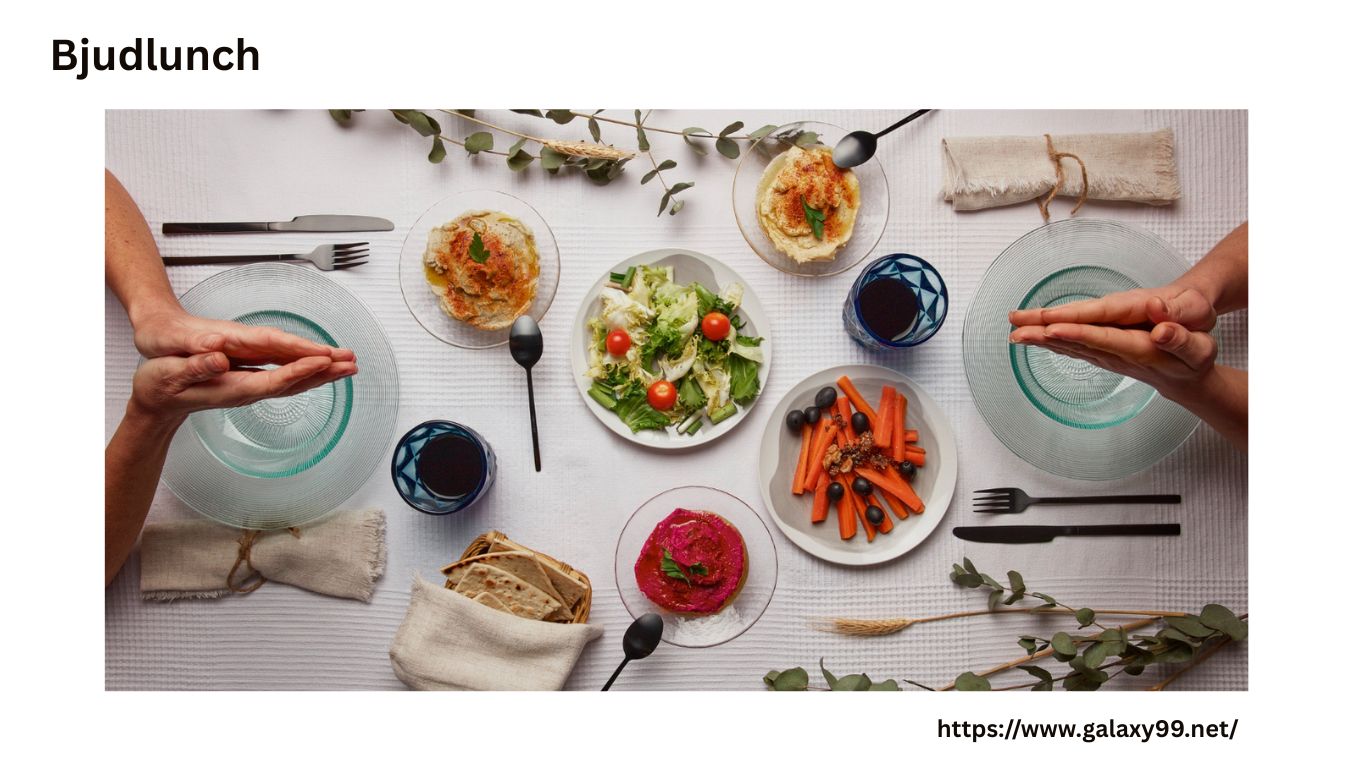
Comprehending “Bjudlunch”
The Swedish word “bjudlunch” literally means “invite-for-lunch.” Beyond its dictionary definition, it has a cozy social undertone: a thoughtful but informal supper where the emphasis is on connection rather than culinary excellence. I see it as a miniature celebration of ordinary life, complete with straightforward cuisine, a mood of generosity, and leisurely discussion.
From guest dynamics and menu design to preparation schedules, financial advice, and cultural etiquette, I break down the fundamentals of organizing and throwing a great bjudlunch in this book. Whether you’re a seasoned host or hosting friends or coworkers for the first time, you’ll discover useful tips—along with a little creative inspiration—to make your lunch enjoyable and unforgettable.
What Makes a Bjudlunch Happen?
Boost relationships: Having a lunch together is a thoughtful way to welcome new neighbors, strengthen friendships, and reduce stress at work.
Make it reachable: While feeling exceptional, midday get-togethers avoid the stress of formal meals.
Promote balance: A lunch gathering allows for flexibility in the evenings and might be considerate of family or sleep routines.
Choosing the Tone
Describe the atmosphere
Are you going for a bright, café-style atmosphere or a warm, domestic vibe? Make a decision early on since it affects everything, including the food presentation, lighting, music, and table setup. I prefer to use a two-word theme as my guidance, such as “rustic & cheerful” or “fresh & friendly.”
Decide on a time and date.
Usually, lunch lasts between sixty and one hundred minutes. Give visitors a definite start and finish time (e.g., 12:15–13:30) for workdays so they may make plans. Let them know the pace so that weekend bjudlunches don’t drag on for too long.
Organize the guest list.
Three to six persons prevent cliques from forming and maintain a lively discourse.
Think about mix-and-match chemistry: pair a few new people with one or two old pals.
Make sure role dynamics and dietary limitations are handled carefully if it’s a business lunch.
Organizing the Menu
Construct around a single focal point.
Serve a main course that is simple to prepare in bulk and can be adjusted for scheduling. Consider:
Salmon or roast chicken served at room temperature
A savory tart or seasonal quiche
A substantial grain bowl foundation, such as quinoa, barley, or farro
Provide two arguments in favor of
Harmonize textures and flavors:
Bright vinaigrette with crisp salad
Warm vegetable meal, such as braised greens or roasted carrots
A basic carbohydrate (excellent bread, young potatoes)
Serve a small dessert.
Make it simple and convenient to prepare ahead of time:
Fruit compote served with ice cream or yogurt
Cardamom biscuits, berry tart, or lemon loaf
A dish of fresh fruit and chocolates
Consider nutritional requirements.
Mark alternatives as nut-free, gluten-free, vegan, or vegetarian. If at all feasible, provide a modular menu so that each person can easily put together their own plate. For example, serve meats and dressings on the side.
Timeline for Smart Prep
Two or three days prior to
Verify the dietary notes and headcount.
Purchase drinks and goods that are shelf-stable.
Prepare marinades, sauces, and dressings; bake any dessert that gets better overnight.
The day before
Vegetables should be cleaned, chopped, and kept in sealed containers.
Prepare the grains or legumes.
Arrange the serving pieces on the table and label each plate with a sticky note to indicate who is responsible for what.
The morning of
If serving cold, bring to room temperature; otherwise, cook the main and warm the sides.
To maintain crisp greens, toss salads right before serving.
Pour water and a citrus-herb garnish into pitchers, then refrigerate the drinks.
Flow of Hosting
Welcome and relax in.
Serve visitors water and a small snack, such as crispbread with spread, spiced almonds, or marinated olives. While the early birds socialize, latecomers may arrive stress-free thanks to this simple gesture.
A family-style buffet
I like family-style lunches. Guests are encouraged to taste a little bit of everything when platters are passed around in a courteous manner. To prevent bottlenecks, use ample serving utensils and trivets.
Cues for conversation
“What’s a small win from your week?” is one of the open-ended questions you should prepare. or “What is your current favorite seasonal dish?” Lighthearted subjects provide a positive and welcoming atmosphere.
Midday-Appropriate Drinks
Citrus wheels and sparkling water
Cold brew with optional syrup or iced tea
For weekend get-togethers, provide light wine or beer (and provide appealing non-alcoholic options as well).
A straightforward mocktail consisting of cucumber ribbons, tonic, and lime juice
Cost-effective Strategies
Select one upscale component (smoked fish, fine cheese) and make the rest straightforward.
Build the meal around the tasty and affordable seasonal products.
Use a mix-and-match appearance or borrow serveware from friends; eclectic may look lovely.
Table Style and Ambience
Keep things simple.
The stage is created without obstructing sightlines using a low-profile centerpiece (a bowl of citrus, miniature herb pots), a neutral tablecloth, and linen napkins. It’s sufficient to have soft background music at conversational volume.
Considerate details
If people don’t know one another, place cards might be helpful.
Dishes and allergies are introduced with a handwritten card or a little printed menu.
If the weather goes bad and you’re entertaining outside, there’s a nice throw close by.
Notes on Cultural Etiquette
Have a tidy place for jackets and a place for shoes; in Scandinavian environments, being on time is valued and shoes may be taken off at the entrance. Being explicit about presents as the host might help guests feel less pressured. For example, “Just bring yourselves—no need for flowers or wine.”
If you’re the visitor, offer to assist with plate clearing, provide sincere praise for a meal, and then write a quick thank-you note. The gathering’s warmth is extended by these minor courtesy gestures.
Seasonal Menu Ideas
The spring
Main course: lemon and herb-roasted salmon
Sides: fresh potato salad with dill and asparagus with mustard vinaigrette
Dessert: vanilla yogurt and rhubarb compote
Summertime
Main course: grilled chicken thighs or tomato-basil tart
Side dishes include charred corn with chili lime butter and watermelon-feta salad.
Dessert: Peach sorbet or berry pavlova
Fall
Main: Gruyère and mushroom quiche
Side dishes include kale salad with apple and pecorino and roasted beets with walnuts.
Dessert: Apple crisp or spiced pear cake
Wintertime
Main course: lentil-walnut loaf or slow-roasted pork shoulder
Side dishes include braised red cabbage and warm carrots with harissa honey.
Dessert: Citrus olive oil cake or chocolate pot de crème
A Basic Checklist for Hosting
Complete the guest list and the dietary instructions.
Make-ahead component plans
The day before, set the table.
Make a snack to welcome guests.
Drinks should be labeled and kept cool.
Use quality utensils and serve family-style.
Keep leftovers in containers.
Final Thoughts
Culinary prowess is not necessary for a bjudlunch. With a carefully considered menu, a leisurely chronology, and a few welcoming touches, it rewards intention. The subtle charm of a pleasant lunch is that people stay a bit longer when the food is simple and the conversation is easy.


