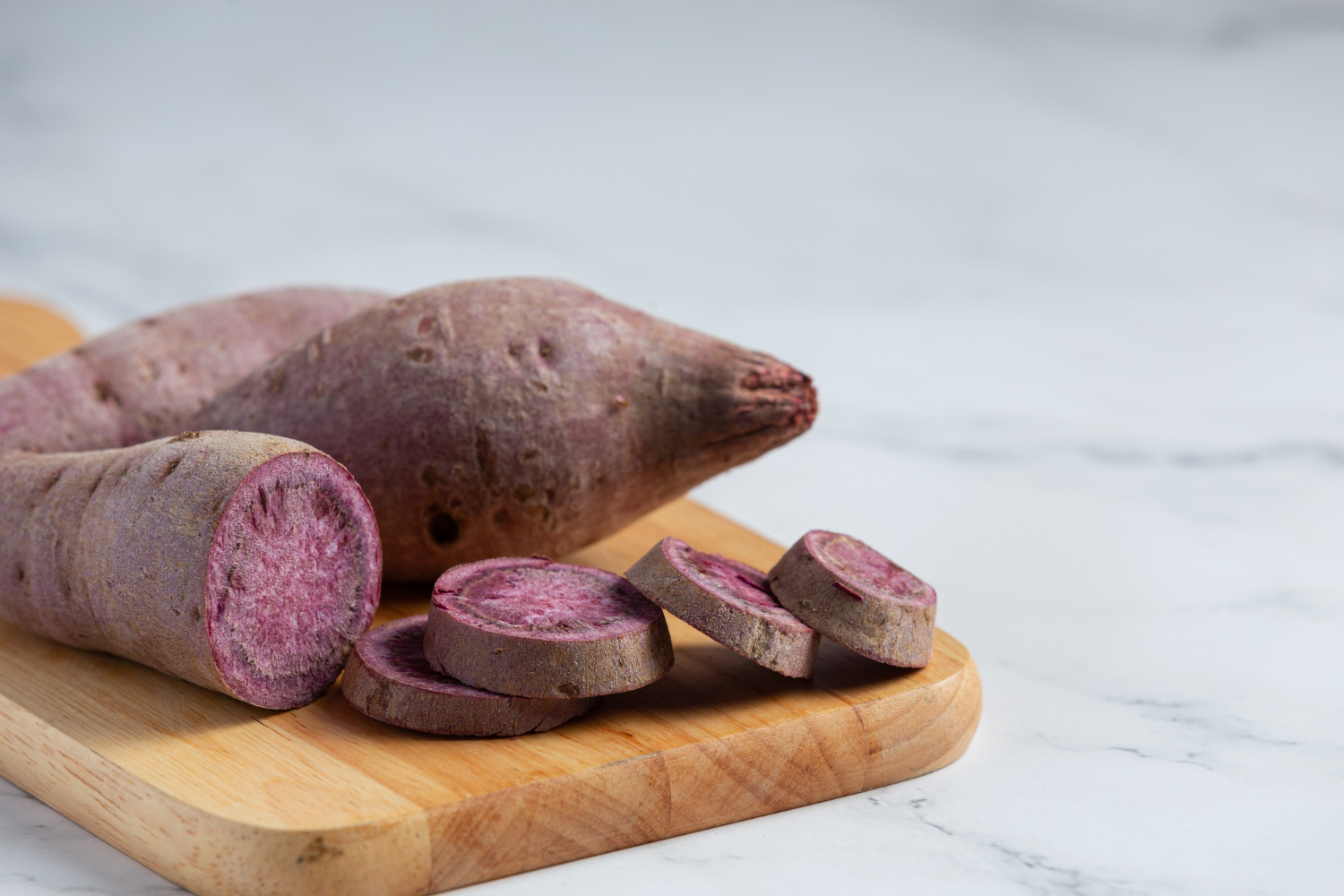
Although ube and purple yam are frequently regarded as unique delicacies, there isn’t much of a difference between them. Dioscorea alata, a type of yam with flesh that ranges in color from light lavender to deep violet-purple, is usually referred to as ube in Filipino. In practical culinary terms, this specific purple yam is typically mentioned when someone discusses true Filipino ube.
The misconception arises from the possibility of purple flesh in a number of unrelated root crops. When cooked or processed into desserts, purple sweet potatoes, Okinawan sweet potatoes, and various types of taro may look identical. However, they are members of distinct plant groupings according to botany. Additionally, their nutritional profiles, flavors, and textures differ. Therefore, color by itself is not a good indicator of what is actually on your plate.
The phrase is similar to multiple roads that share the same color on a map but lead to distinct destinations for consumers and home cooks. When purchasing powders, extracts, jams, or dessert mixes, it is still helpful to read the ingredient list. Products labeled ube purple yam typically refer to Dioscorea alata or an ingredient manufactured from it. It is simpler to identify the flavor of true ube, use it properly, and tell it apart from other violet-colored tubers when you know what it is.
Are purple yams and ube the same thing?
Yes, but with a crucial twist. Although ube is a purple yam, the term “purple yam” is occasionally used ambiguously to refer to various purple tubers in recipes, internet forums, and shops. The term “authentic ube” usually refers to Dioscorea alata, a real yam that is a member of the Dioscoreaceae family.
The term “yam” itself contributes to the issue. Despite the fact that sweet potatoes and genuine yams are botanically distinct, the term is occasionally used to refer to sweet potatoes in ordinary English. Sweet potatoes are in the Ipomoea genus, but ube is in the Dioscorea genus. More than just scientific naming is impacted by this distinction. The two plants acquire distinct flavors, textures, and culinary qualities.
Dioscorea alata is grown in tropical climates, especially in sections of Africa, the Pacific, and Southeast Asia. It is closely linked to Filipino cooking, where ube has long been used in cakes, pastries, frozen desserts, and sweets like ube halaya.
Not all of the time is the flesh strikingly purple. While some are paler or have white streaks, others are deep violet. Because commercial desserts frequently include extra coloring, consumers may assume that every fresh ube tuber has an incredibly vivid purple interior, which makes this natural difference important.
How can a purple sweet potato be distinguished from ube?
The most common error is mistaking purple sweet potatoes for purple yams. Both are starchy, can have brightly colored flesh, and can be found in desserts. However, once you know what to look for, they are distinct vegetables with observable differences.
Texture and appearance are helpful hints.
The exterior skin of fresh ube is typically uneven and rough, resembling the bark-like surface of many real yams. The tuber may have an irregular shape, be cylindrical, or be elongated, depending on the variety and growing conditions. The flesh may appear lavender, clearly violet, or white with purple flecks if cut open.
In general, a purple sweet potato resembles a regular sweet potato more. Although each cultivar has a different appearance, its skin is often thinner and smoother. For instance, Okinawan sweet potatoes frequently have purple meat encircled by beige or light-colored skin.
When they are cooked, the difference is more noticeable. When mashed, cooked ube can take on a creamy texture. It is often thick and starchy. Purple sweet potatoes, particularly those with a high starch content, can have a harder, drier feel.
Neither of the visual cues is infallible. Natural variation is produced by agriculture, and most distinguishing features are eliminated in processed goods. The botanical name or ingredient description provides a more trustworthy response when purchasing packaged powder or puree than the hue.
The taste isn’t quite the same.
Ube has a distinct scent that is often characterized as slightly earthy, nutty, and vanilla-like, along with a moderate sweetness. Instead of being overtly sweet, the flavor is subtle. Concentrated extracts, sugar, and additional flavorings may be more responsible for the strong “ube flavor” seen in commercial cakes and beverages than the tuber itself.
The flavor of purple sweet potatoes is more similar to that of regular sweet potatoes. They typically lack the unique aromatic quality associated with traditional Filipino ube, but they can be earthy and sweet. This distinction is especially apparent in basic dishes where the tuber is boiled or steam-cooked with few other ingredients.
This explains why a dessert’s color can be replicated without precisely replicating its flavor when ube is substituted with a purple sweet potato. In certain recipes, the substitute might still function structurally, but the finished product will have a distinct flavor profile.
Taste is a better indicator of taro. It is typically much whiter on the inside, more neutral, and slightly nutty. Just because a finished drink or dessert is violet does not mean that purple-speckled taro is ube.
The purple yam’s nutritional profile
Fresh purple yams are mostly starchy vegetables that are high in carbohydrates. Similar to other yams, it provides nutritional fiber and trace levels of protein, but its primary energy source is complex carbohydrates. Variety, soil, ripeness, and cooking technique all affect its precise nutritional makeup.
Additionally, ube contains a number of minerals, such as vitamin C and potassium. As part of a diversified diet, these nutrients support healthy physiological processes. Therefore, fresh ube should not be considered a concentrated supplement or wonder food but rather like other nutrient-dense root vegetables.
From a nutritional standpoint, its purple coloration is especially intriguing. Anthocyanin pigments, which are members of the larger polyphenol family, are primarily responsible for the violet hue. Additionally, foods like purple cabbage, black rice, blueberries, and blackberries contain anthocyanins.
In experimental settings, these substances exhibit antioxidant qualities. This does not imply that consuming ube will cure or prevent a specific illness. Human health is influenced by a variety of factors, including heredity, lifestyle choices, and general eating habits. The ability to provide variety, fiber, carbs, and plant chemicals to the diet is the most compelling practical argument for including purple yam in meals.
Is ube a nutritious food inherently?
The preparation greatly influences the response. Despite having the same ingredient in their names, freshly cooked ube and ube-flavored milkshakes have somewhat different nutritional profiles.
Purple yams can be baked, boiled, or steamed and easily incorporated into a well-balanced dinner. Along with veggies and protein, it can be a source of carbohydrates. When compared to highly refined carbohydrate items, its fiber level may also contribute to a more satisfying meal.
The yam is frequently combined with sugar, condensed milk, coconut milk, butter, or cream in both traditional and commercial ube desserts. In addition to increasing sugar and energy density, these ingredients give ube sweets their distinctive rich texture and flavor. That is not negated by the presence of purple yam.
This also holds true for drink mixtures and ube powders. A sweetened instant latte mix that contains sugar, flavoring, and coloring differs greatly from pure dehydrated yam powder. The simplest method to know what you are really purchasing is to read the ingredient list.
Using purple yam in cooking
Usually, fresh ube is prepared before consumption. It is not usually regarded as a raw snack vegetable, much like many real yams. Its texture is enhanced by cooking, making it appropriate for both savory and sweet recipes.
Steaming and boiling are two of the easiest techniques. When the meat is soft, it can be mashed and added to traditional preparations, cakes, breads, pancakes, and fillings. When a harder, slightly drier texture is desired, baking is an additional alternative.
Ube halaya, a sweet purple yam jam or pudding that is produced by boiling mashed ube with ingredients like milk and sugar until the mixture becomes thick and smooth, is one of the most well-known Filipino dishes. Ube halaya can be consumed on its own or added to sweets and pastries.
When fresh tubers are not available, powdered ube is more convenient. Certain powders require rehydration prior to use because they are derived from dehydrated purple yam. Others are ingredients that have been prepared using extra ingredients. Once more, ube extract is unique. Rather than offering the texture and nutritional qualities of the entire tuber, it is mostly used to enhance the flavor and color of ube.
What does some ube appear considerably brighter than the fresh yam?
Although natural ube can be stunningly purple, the tuber alone is not usually responsible for the nearly neon violet color found in some ice creams, pastries, and bubble teas. To create a uniform look, commercial preparations may employ food coloring, flavoring, or ube extract.
This does not imply that there isn’t any real ube in the product. To account for inherent variations between harvests, manufacturers may mix actual yam with flavoring. While fresh agricultural ingredients can differ significantly, consumers typically anticipate ube desserts to have the same vibrant purple color each time they purchase one.
As a result, color shouldn’t be utilized to gage nutritional value. More true ube can be found in a pale homemade recipe made mostly of real yam than in a vivid purple beverage that contains very little of it.
When it comes to packaged meals, ingredients speak louder than appearance. If you want to buy a product that actually contains the tuber, look for names like Dioscorea alata, ube, or purple yam.
Not all purple root vegetables can be substituted for ube.
Although ube, purple sweet potato, and taro might occasionally serve similar culinary purposes, classifying them as the same items leads to needless confusion. Dioscorea alata, or ube, is a real yam with a unique flavor that is mild and fragrant. Although they come from a distinct family of plants, purple sweet potatoes typically taste more like regular sweet potatoes. Another distinct species with a unique flavor and texture is taro.
When a dish significantly relies on the flavor of true ube, the distinction is particularly significant. The taste can be altered while maintaining the appearance and starchiness by using a different purple tuber. The change could be less obvious in recipes where color is more important than scent.
All of these foods can provide beneficial vitamins, fiber, and carbohydrates from a nutritional perspective. None should be regarded as superfoods. The overall shape of the food, the serving size, the preparation technique, and the remainder of the diet are more important.
So, are purple yam and ube actually the same ingredient? Yes, when “purple yam” refers to Dioscorea alata. In Filipino cuisine, ube is just the moniker most closely linked to this specific yam. When the term is applied to unrelated purple sweet potatoes or other violet-colored roots, misunderstanding starts.