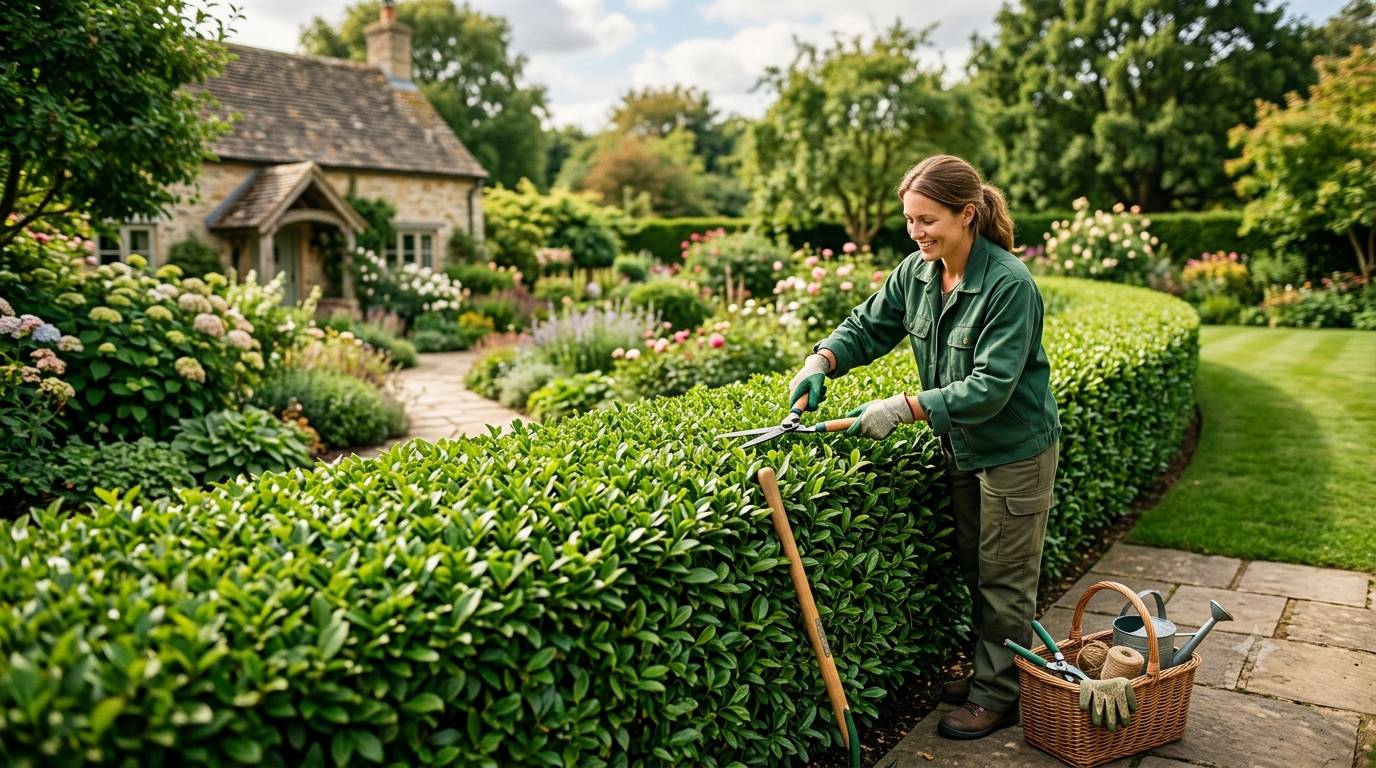
Taking care of your hedges year-round can be challenging, especially if you don’t have much gardening experience.
Maintaining healthy shrubs and hedges requires proper care, much more than just running a power trimmer over them once a year. You need to understand the proper timing and technique if you want to get the best results.
Timing matters
When it comes to hedge care, timing is essential. In Britain, seasons are highly varied, so the effect of various forms of hedge care can be dramatically different, depending on the month of the year.
The Wildlife and Countryside Act 1981 makes it illegal to intentionally damage or destroy a bird’s nest between March and August. That’s why most professionals recommend hedge care takes place in the autumn months or the winter. You can do a bit of minor maintenance in the summer, but it’s best done by hand so you don’t disturb nesting birds.
It’s worth noting that evergreen hedges are best trimmed in the spring before nesting season. Meanwhile, deciduous hedges (those that lose their leaves) are best left for the end of winter. Pruning them early in the year encourages spectacular growth come the spring.
The Batter Technique
Once you start trimming, apply the “batter” technique. The idea is to trim your hedge from top to bottom in a slanting “A” shape.
If you just trim straight up and down, it can prevent incoming light from reaching the lower branches. This, in turn, weakens the shrub and makes it more challenging for it to thrive as daylight hours increase.
When you trim in a slanted pattern, that issue goes away. Sunlight can continue to reach the lower leaves, giving the plant access to the energy it requires.
Maintain Proper Tools
Take extra care to maintain your tools. Ensure you avoid using blunt shears that leave plants susceptible to fungal infections. Always sharpen all of your blades before the pruning season begins to ensure clean cuts.
If you have soft or leafy shrubs, manual secateurs are usually best. Electric cutting equipment is superior for hedges with woody branches due to its ability to resist snagging-related damage.
Just make sure you clean your cutting tools between cutting operations with rubbing alcohol. If you don’t, it could lead to the spread of disease.
When To Call Professionals
DIY maintenance is fine when you only have a few shrubs around your property to maintain. But what happens if you have a lot of them?
In that case, it’s probably best to call in professionals. Getting the right assistance with high hedges is particularly important for health and safety reasons.
You might also need to hire shrub and hedge trimming services in Suffolk for more complex jobs. For example, if you have an extensive property or a business with a large boundary. Outsourcing that work can give you peace of mind.
Conclusion
In summary, maintaining your hedges adds significant value to your property. However, adhering to seasonal timelines is critical in a location like the UK. If the work is complex, you might consider professional assistance.